Procurement Management Strategies and System
To ensure the supply chain remains adaptable to changes and business challenges, PTG prioritizes efficient, transparent management that aligns with sustainable development principles. The company has implemented critical strategies to enhance supply chain flexibility, minimize risks, and leverage technology to optimize operations. These efforts enable PTG to respond to market demands swiftly and effectively, including:
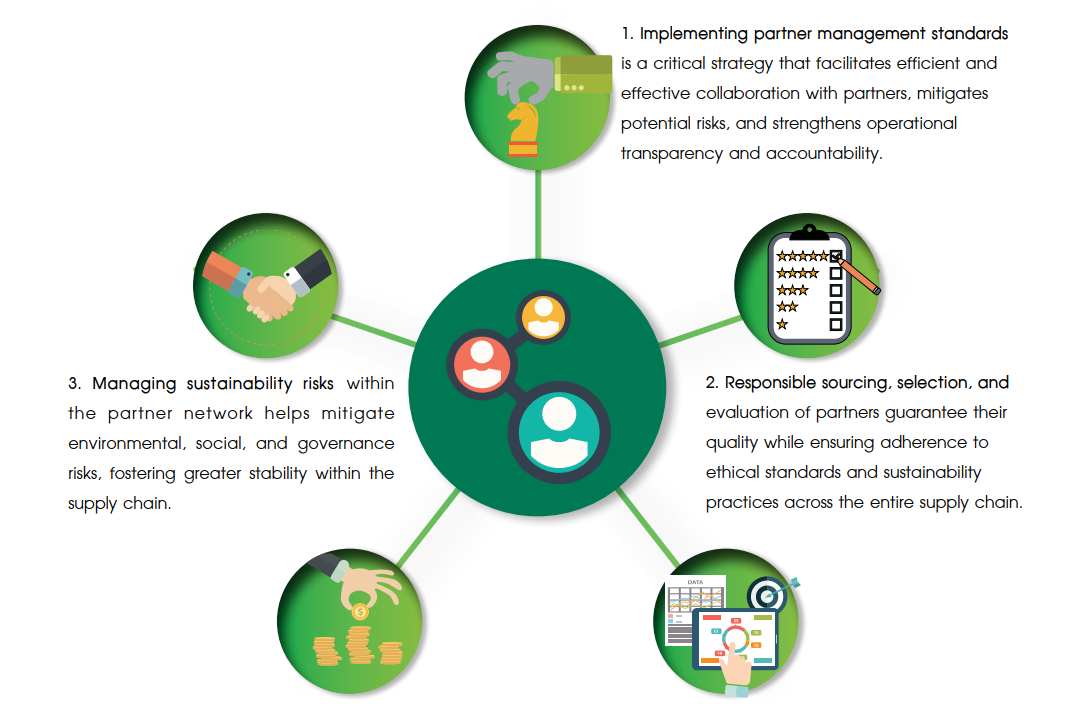
The following five strategies are thus executed.
1. Vendor Management Standard Provide a vendor management standard applicable to acquisition, potential assessment, retention, and risk management to ensure that the procurement process is carried out effectively and respond to higher product demands, as well as to reassure that products and services delivered meet the required quality and are in compliance with policies, regulations, operational standards, and the objectives of the company.
2. Accountable vendor procurement and assessment The company works on acquiring and recruiting productive and credible vendors while also adhering to assessment criteria to maintain the Approved Vendor List. In addition to product quality/safety, pricing, and quality of deliverables, the company also places importance on the management of ESG issues of the vendors, which encompasses environmental impact management, good labor practices—such as prohibitions on child labor, fair wages and benefits, preventing forced labor and human trafficking, respecting freedom of association and collective bargaining, and ensuring harassment-free and non-discriminatory practices—as well as compliance with applicable laws and regulations to sustainably enhance the performance of business operations, both of the company and the vendors.
3. ESG Risk Management Outline a vendor ESG risk assessment, of which the criteria will be based on the nature of each business field, and also actively evaluate the vendors and monitor their operations.
4. Cost Optimization Committed to providing an excellent work process by consolidating data management to systematically classify products and vendors through technology usage to enhance each step of the procurement process. Moreover, the company prioritizes transparency, accountability, cost reduction, and minimization of errors.
5. Relationship Development Develop strong and trusting relationships with vendors while also identifying business growth and expansion opportunities, both in terms of innovation and the development of sustainability potential through knowledge exchange between organizations.
Buyer Training
PTG organized an online Buyer Training session on “Anti-Corruption and Code of Conduct” for employees across all departments, including buyers. A total of 319 employees participated in the training, which covered key topics such as business ethics, conflict of interest prevention, insider trading prevention, procurement practices, and anti-corruption guidelines. The training aimed to foster a corporate culture that upholds transparency, good governance, and compliance with international standards. It also provided opportunities for employees to exchange opinions, ask questions, and clarify their roles and responsibilities, enabling them to effectively apply the principles of ethics in their daily work and improve operational performance sustainably.
Download Supplier Code of Conduct

Download Supplier Acquisition and Procurement Policy
Suppler Classification (Critical tier 1 Supplier)
PTG has developed a supply chain risk management process, covering suppliers in both oil and Non-oil businesses by categorizing them into: suppliers directly engaging in a business with the Company (Tier 1 Suppliers), key suppliers of the Company (Critical Tier 1 Suppliers), and suppliers indirectly engaging in a business with the Company (Critical Non-oil 1 Suppliers) based on the following criteria:
1. Volumes of purchase
2. Importance of products/services to the Company's business
3. Level of dependence on the supplier; or substitution of products
Supplier’s ESG Risk Assessment and Audit
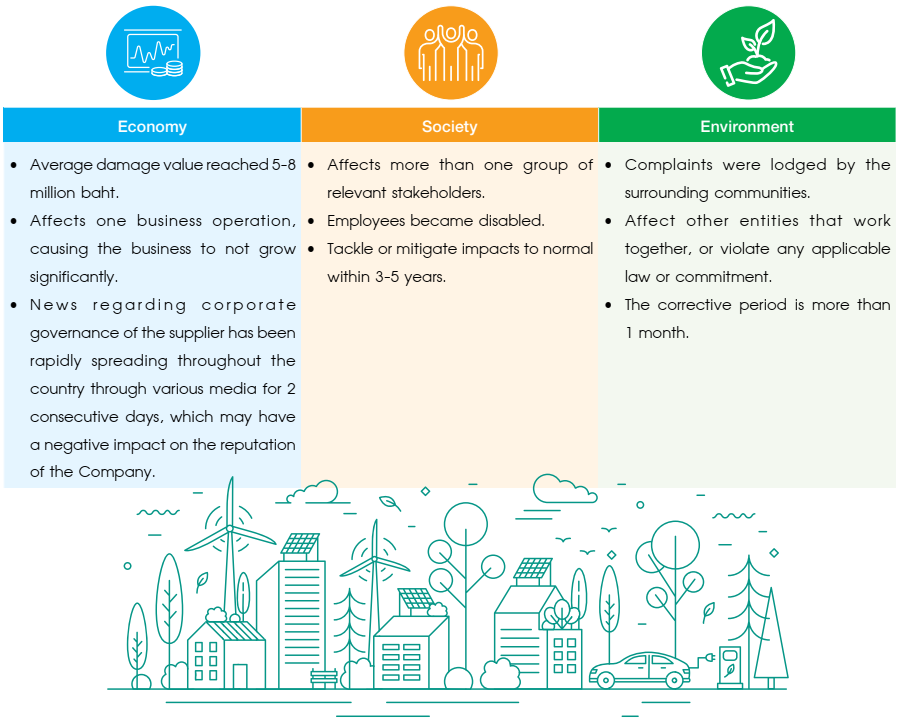
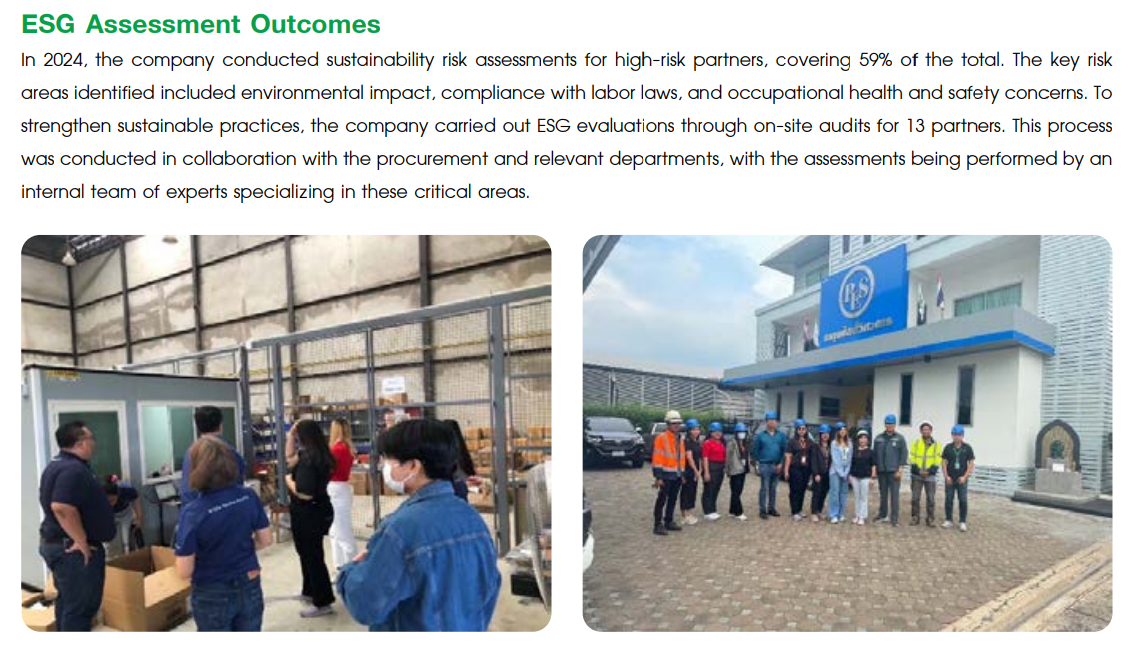
PTG has a sustainability risk assessment for its suppliers, covering both oil and Non-oil businesses, based on the sustainability risk assessment criteria in the dimensions of both likelihood and ESG risk impacts, which cover economic, societal, and environmental issues. For instance, risks of environmental impacts caused by suppliers’ businesses, surrounding community risks caused by business establishments or facilities, risks caused by delayed delivery of goods/services, etc. When becoming aware of the high-risk and very high-risk groups of suppliers, the Company shall conduct an environmental, social, and corporate governance audit (ESG Audit) to ensure that the risks encountered are properly managed the company conducts a review once a year.
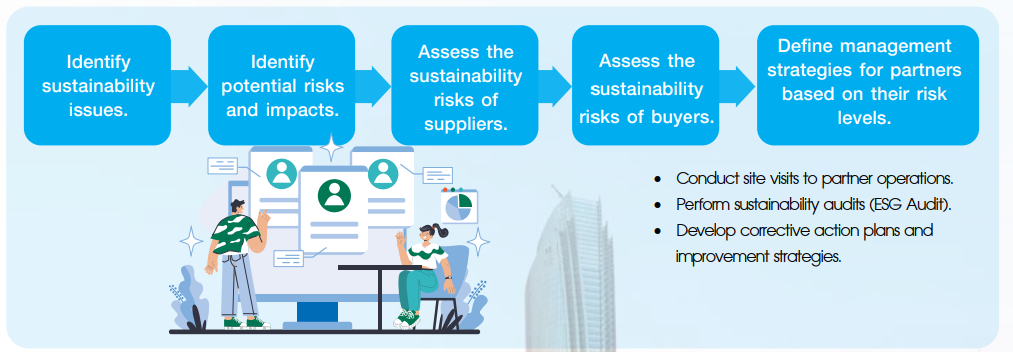
Supplier Training and Awareness Program
The company recognizes the importance of building a sustainable supply chain and has continuously organized training programs in collaboration with its suppliers. The objective is to strengthen suppliers’ knowledge, understanding, and engagement in responsible business practices in alignment with international sustainability standards. The training program covers the following key areas: Sustainable Supply Chain Management – emphasizing responsible sourcing and operational practices that minimize social and environmental impacts. Business Ethics – promoting transparency, anti-corruption, and adherence to good corporate governance principles. Labor Practices and Human Rights – ensuring that suppliers respect human rights, comply with labor laws, and prohibit child labor and forced labor. Occupational Health, Safety, and Environment (HSE) – encouraging suppliers to implement safety measures, reduce workplace risks, and adopt environmentally friendly practices. As a result, suppliers are able to apply the knowledge gained to their operations, thereby improving their practices in line with the Company’s sustainability policies. This contributes to building a resilient, transparent, and responsible supply chain that delivers long-term value to all stakeholders.
Definition of Suppliers with High Sustainability Risks
Performance in 2024
Result of Supplier Classification and Analysis
| Type of Supplier |
Number of Supplier |
Purchase Proportion (Percent) |
| Tier-1 Suppliers |
966 | 100 |
| Critical Tier-1 Suppliers |
65 | 6.73 |
| Critical Non-tier 1 Suppliers |
6 | - |
Results of Supplier Sustainability Risk Assessment 2024
| Type of Supplier | Results |
| Tier-1 supplier |
13 Suppliers |
| High-risk suppliers |
31.81% |
Supplier Code of Conduct
Purchasing practices towards suppliers are regularly reviewed to ensure that the Company’s practices are aligned with its own Supplier Code of Conduct and to avoid potential conflicts with ESG requirements. In addition, the Company communicates these requirements to suppliers, mandates compliance, and conducts periodic monitoring and evaluations. This process helps to enhance supplier performance standards, mitigate sustainability risks, and foster a transparent, responsible, and resilient supply chain.
Supplier ESG Assessment Results
Collaborative Development Plan with Suppliers
Following the completion of the ESG assessment for suppliers, PTG has developed a joint corrective action plan with suppliers whose ESG performance does not meet PTG's assessment criteria. Additionally, there is sharing and support of crucial practices for suppliers through the PTG Knowledge Sharing activity: ESG for Sustainability through the Supply Chain. This event is conducted online via video conferencing to facilitate convenient access for all suppliers. The objective is to encourage suppliers to operate in accordance with various sustainability standards that can be benchmarked against competitors in the market. Moreover, there is support for suppliers' promotion and improvement of social, governance, and environmental aspects through both remote processes and on-site interventions. For example, during ESG assessments, PTG provides recommendations and suggestions to enhance suppliers' ESG operational processes. Training sessions are also conducted to impart knowledge on safety and occupational health at work for contractors and supplier companies. This includes technical deep-dive support programs to enhance the capabilities and efficiency of suppliers in the realm of ESG.
Trade Credit Policy and Term
The Company has a credit management policy. which has established criteria and credit procedures for each business unit that can compete and compare with competitors By considering the overall period of money received and paid to be consistent. and has no effect on financial liquidity The company has also taken into account the costs and financial risks that may arise from future exchange rates.
| Financial Ratio (Days) |
2024 | 2023 | 2022 | 2021 | Average 3 years |
|---|---|---|---|---|---|
| Average debt collection | 1.27 | 1.21 | 1.07 | 1.08 | 1.01 |
| Average debt payment | 14.76 | 13.30 | 11.12 | 11.45 | 14.32 |
The company determines the payment period for its partners within 30 days. In 2024, the company has an average debt collection period of 1.29 days and an average payment period of 14.76 days, which is within the criteria set by the policy.
10076
10074